
Positive communication in Bamboo Montessori
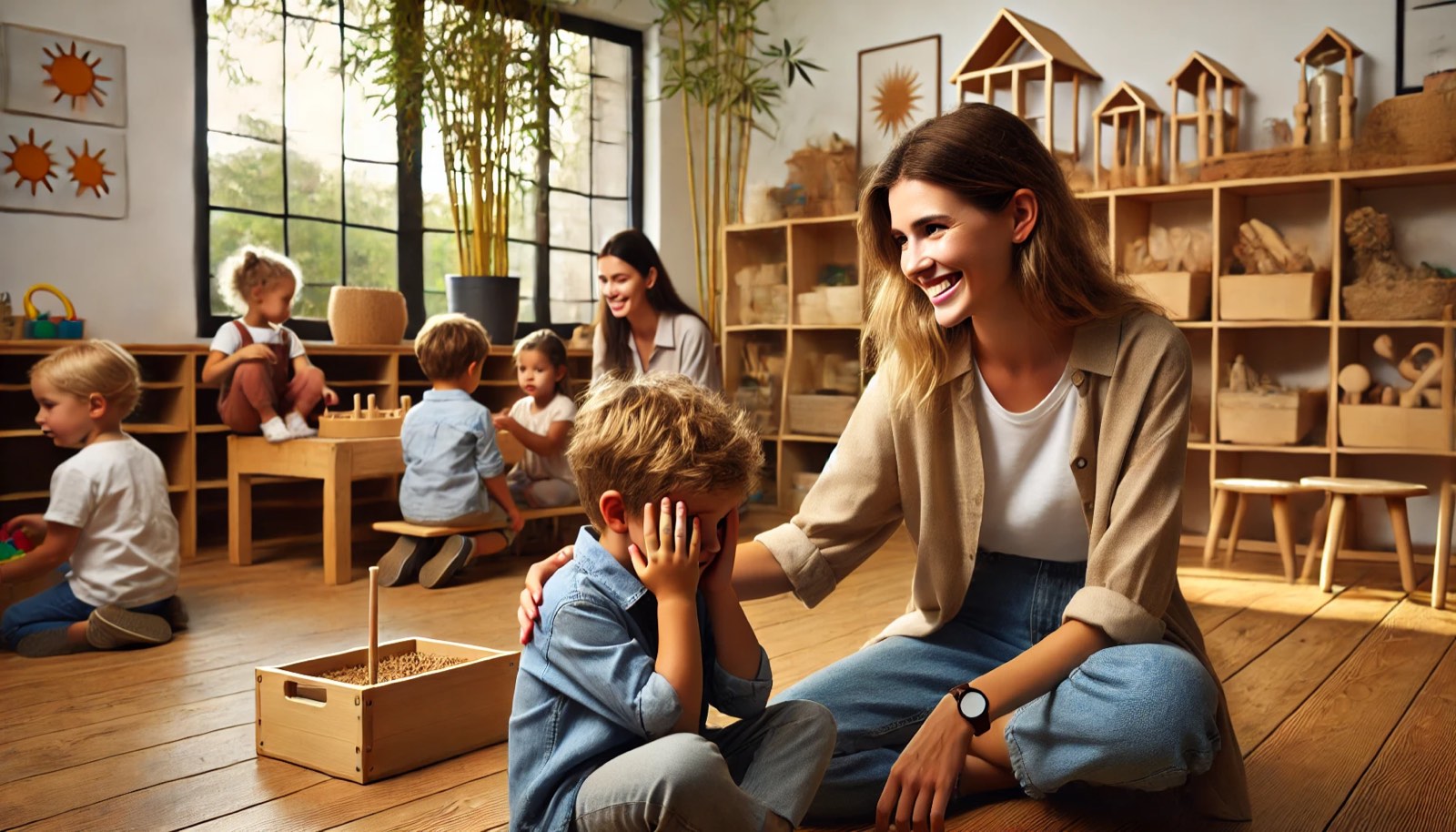
At Bamboo Montessori, we place great importance on communicating with children in a positive way. Instead of saying “no” or focusing on what a child should not do, we guide them through clear, short, and supportive messages. This approach not only encourages cooperation, but also helps children feel more confident and secure in their ability to make good choices.
Why do we avoid the word “no”?
Repeatedly hearing “no” can be discouraging for young children. Although boundaries are important, the way we communicate them matters greatly. Focusing on positive guidance shifts the conversation from what the child should not do to what they can do. This makes it easier for children to understand expectations and reduces frustration or the feeling of being misunderstood.
How we use positive instructions
Here are a few examples of how we replace negative messages with clear and supportive guidance:
- Instead of: “Don’t run!” — we say: “Move carefully.”
- Instead of: “Don’t grab the toy!” — we say: “Wait for your turn to use the toy.”
- Instead of: “Stop shouting!” — we say: “Please use your quiet voice.”
This approach helps children understand what is expected of them and makes it easier for them to follow the rules and succeed.
Why does it work?
- Clarity and simplicity — children respond better to instructions that are direct and easy to understand. Positive language reduces confusion and focuses attention on desired behaviors.
- Encouraging cooperation — when children feel respected and understood, they are more willing to cooperate rather than resist.
- Developing emotional intelligence — positive communication helps children regulate emotions, recognize acceptable behavior, and develop empathy toward others.
What results do we see in practice?
This approach brings wonderful results in our classrooms. For example, during group time, when a child becomes restless, instead of saying, “Don’t move!”, we gently suggest, “We are sitting still like a butterfly.” This helps the child refocus and maintain a calm, supportive atmosphere.
How parents can support positive communication
- Turn “don’t” statements into “do” statements — for example, instead of “Don’t jump on the couch!” say “Feet on the floor, please.”
- Stay calm — children strongly reflect our tone and energy. A gentle, calm voice strengthens positive communication.
- Be consistent — the more often a child hears positive instructions, the faster they adapt to this communication style.
At Bamboo Montessori, positive communication is one of the foundations of our philosophy of working with children. It helps us create a calm, respectful, and supportive environment in which children can thrive.
We invite you to try this approach at home and discover how much it can change your child’s behavior and emotional well-being.