
The Difference Between a Traditional Teacher and a Montessori Guide
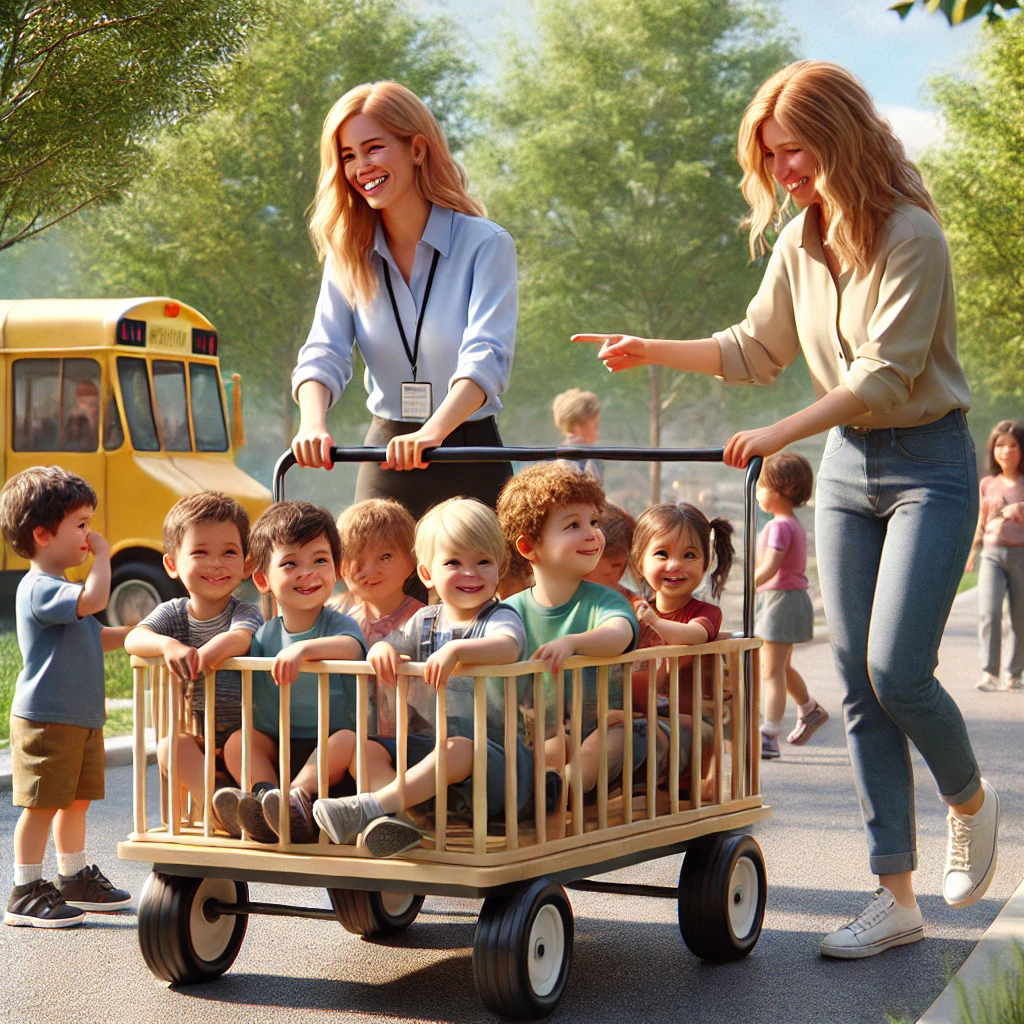
Imagine a handcart: a traditional teacher pulls children toward the same goal regardless of the individual challenges they face. A Montessori guide, by contrast, prepares the environment, observes the children, and offers support when needed — they present different paths and allow children to choose their own destination.
In a Montessori classroom the guide focuses on observation and support rather than constant instruction. You will often see guides taking notes, preparing individual presentations, and making materials available that match each child’s interests. Traditional classrooms more commonly rely on whole-group instruction and teacher-led activities.
The role of the Montessori guide:
- Observer: notices each child’s interests and needs, and adapts the environment to developmental stages.
- Environment designer: creates conditions that promote independence, love, respect, and clear boundaries while giving children freedom to work.
- Bridge: connects the child to appropriate materials and inspires them to take on new, challenging tasks at their own pace.
Becoming a Montessori guide requires more than professional skills — it requires love, compassion, and full dedication to children. Happy Teachers’ Day to all dedicated educators!